L-Carnitine
🚚 Ships same day if ordered before 2PM EST
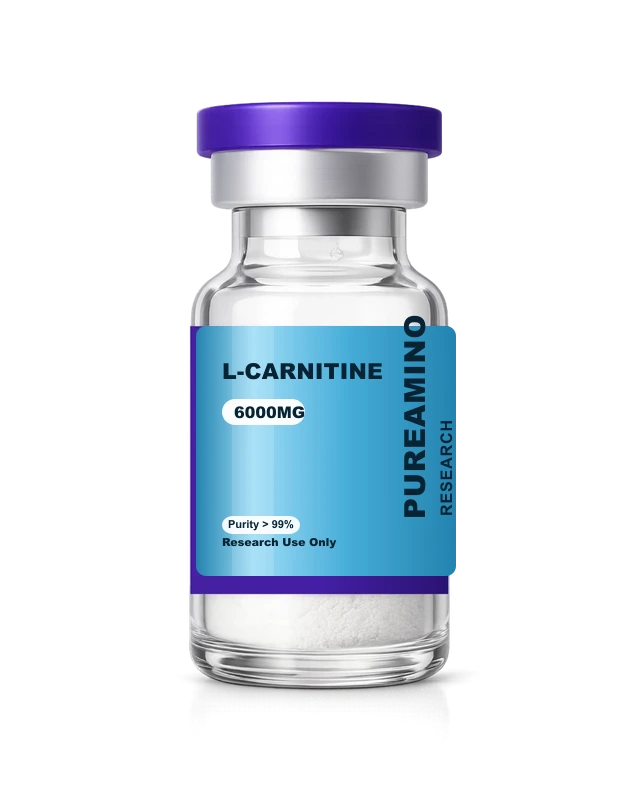
Injectable L-Carnitine 6000mg for metabolic research. L-Carnitine facilitates fatty acid transport into mitochondria for beta-oxidation and is studied for fat metabolism, exercise performance, and cellular energy production.
Compound Profile
Pharmaceutical Data Sheet
Mechanism of Action
How L-Carnitine Works
L-Carnitine (levocarnitine) is an endogenous quaternary ammonium compound essential for the transport of long-chain fatty acids across the inner mitochondrial membrane via the carnitine palmitoyltransferase (CPT) system. Without carnitine, long-chain fatty acyl-CoA molecules cannot enter the mitochondrial matrix for β-oxidation — making carnitine the rate-limiting cofactor for fat-derived energy production. Injectable L-Carnitine bypasses first-pass metabolism and oral bioavailability limitations (~15%), achieving higher plasma levels for metabolic research.
- CPT-1 on outer mitochondrial membrane conjugates carnitine to long-chain acyl-CoA
- CACT translocase shuttles acylcarnitine across inner membrane
- CPT-2 regenerates acyl-CoA in the matrix for β-oxidation
- Enables β-oxidation of C14-C20 long-chain fatty acids
- Each β-oxidation cycle produces FADH₂, NADH, and acetyl-CoA
- Acetyl-CoA enters TCA cycle for ATP generation via oxidative phosphorylation
- Maintains free CoA/acyl-CoA ratio in mitochondria
- Prevents toxic acyl-CoA accumulation during metabolic stress
- Exports excess acyl groups as acylcarnitine for renal clearance
At the outer mitochondrial membrane, CPT-1 converts long-chain acyl-CoA to acylcarnitine. Carnitine-acylcarnitine translocase (CACT) shuttles acylcarnitine across the inner membrane. CPT-2 reconverts acylcarnitine to acyl-CoA inside the matrix, releasing free carnitine for recycling. This cycle is the sole mechanism for mitochondrial import of C14-C20 fatty acids.
Bremer J., Physiol Rev (1983): Carnitine — Metabolism and Functions.
Preclinical Findings
Research Models
Clinical Data
Clinical: Enhanced Fat Oxidation, Exercise Performance & Recovery
Multiple randomized controlled trials demonstrate that L-Carnitine supplementation increases fat oxidation during submaximal exercise, reduces markers of exercise-induced muscle damage (CK, LDH, DOMS), and improves recovery kinetics. A meta-analysis (Pooyandjoo et al., 2016) of 9 RCTs found significant weight loss in supplemented groups. Injectable routes achieve 100% bioavailability vs. ~15% oral.
Pooyandjoo M et al., Obes Rev (2016); Volek JS et al., Am J Clin Nutr (2002); Spiering BA et al., J Strength Cond Res (2007).
Meta-analysis of 9 RCTs; multiple controlled human exercise studies
Research Outcomes
Key Research Success Metrics
Safety Profile
Research Safety Notes
- FDA-approved as Carnitor® for primary and secondary carnitine deficiency
- Generally well-tolerated at doses up to 6g/day in clinical studies
- Injectable formulations avoid GI side effects (nausea, diarrhea) seen with high-dose oral
- Rare: transient injection site discomfort at high concentrations
- Does not affect cardiac QT interval at therapeutic doses (Rebouche, Am J Clin Nutr 2004)
L-Carnitine (levocarnitine) is FDA-approved for carnitine deficiency. Metabolic and performance data is from controlled studies but individual responses vary. This injectable formulation is for research use only.
About L-Carnitine
Injectable L-Carnitine 6000mg for metabolic research. L-Carnitine facilitates fatty acid transport into mitochondria for beta-oxidation and is studied for fat metabolism, exercise performance, and cellular energy production.
All PureAmino Research compounds are manufactured to research-grade standards and independently tested by Janoshik Analytical & Kovera Labs. The Certificate of Analysis for this compound includes full HPLC chromatography data, mass spectrometry confirmation, net purity percentage, and net content verification.
Research Use Only
This product is strictly for in vitro research and laboratory use only. Not for human or veterinary consumption. By purchasing, you confirm use in a controlled research setting.